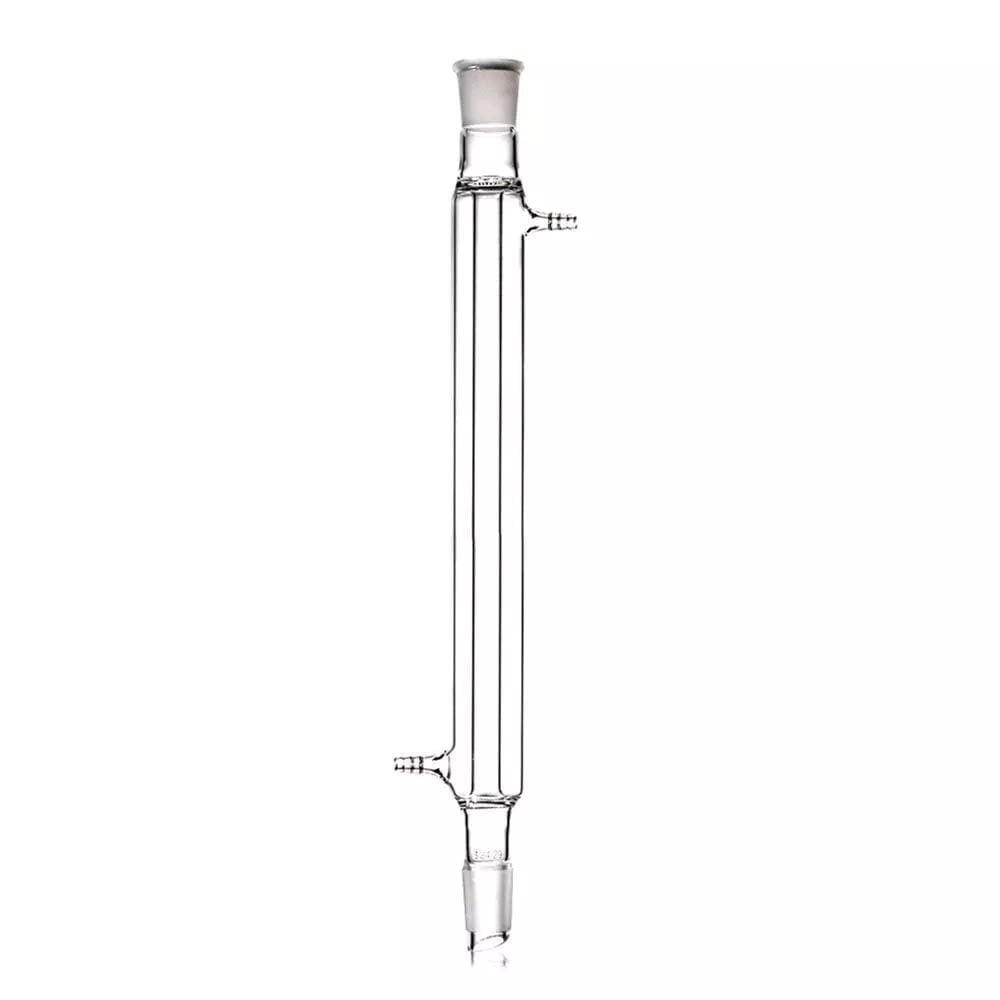
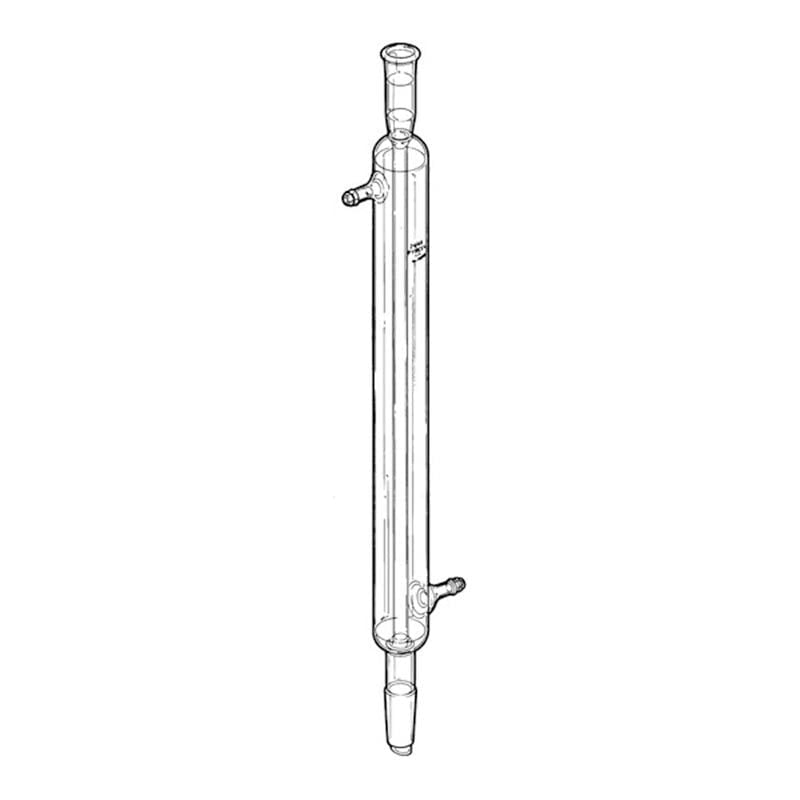
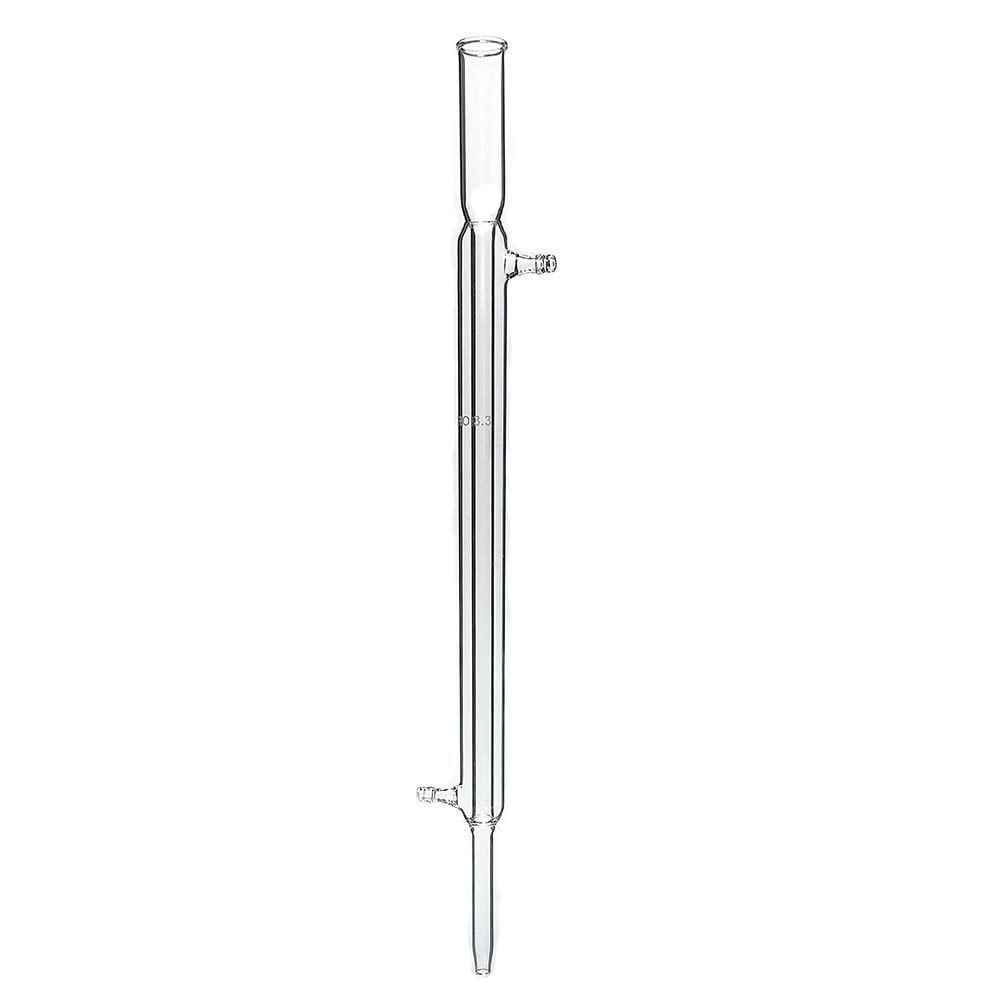
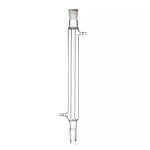
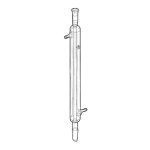
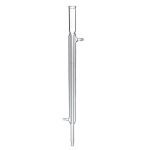
Condenser Liebig
Have questions?
Talk to Customer Service.
M-F: 9am-5pm
| Length (mm) | Ground | Ground Neck (NS) |
| 300 | Upper and Lower Neck | 29/32 - 29/32 |
| 300 | Lower Neck | 29/32 |
| 300 | None | - |
| 400 | Upper and Lower Neck | 29/32 - 29/32 |
| 400 | Lower Neck | 29/32 |
| 400 | None | - |
Condenser Liebig is manufactured from heat-resistant, durable borosilicate glass in accordance with DIN/ISO standards, ensuring reliable and long-lasting performance in laboratory environments. The straight inner tube design allows vapors to pass through while being efficiently cooled by circulating water in the outer jacket, making it ideal for simple distillation and condensation processes.
The condenser features glass side arms compatible with 8–9 mm bore tubing, enabling secure and leak-free connection to standard laboratory water hoses. Its thick-walled construction and reinforced rim provide enhanced mechanical strength, significantly reducing the risk of breakage during washing, handling, and transportation.
Condenser Liebig is one of the most commonly used condensers in chemistry laboratories, research facilities, and educational institutions, valued for its simplicity, efficiency, and ease of use.
Usage Areas
Distillation experiments
Vapor condensation processes
Chemistry and analytical laboratories
Educational and training laboratories
Advantages
High-quality borosilicate glass construction
Simple and efficient straight-tube design
Heat and chemical resistant
Reinforced rim for increased durability
Compatible with standard laboratory tubing
Technical Specifications
Product Type: Liebig Condenser
Material: Borosilicate Glass
Standards: DIN / ISO compliant
Side Arm Tubing Compatibility: 8–9 mm bore size
Safety and Storage Information
Handle glassware carefully to avoid impact damage
Avoid sudden temperature changes
Clean using appropriate laboratory glassware methods
Store in a secure and padded environment
Usage Notes
Ensure correct water inlet and outlet orientation
Use suitable tubing for tight and secure connections
Recommended for supervised laboratory use
Related products